
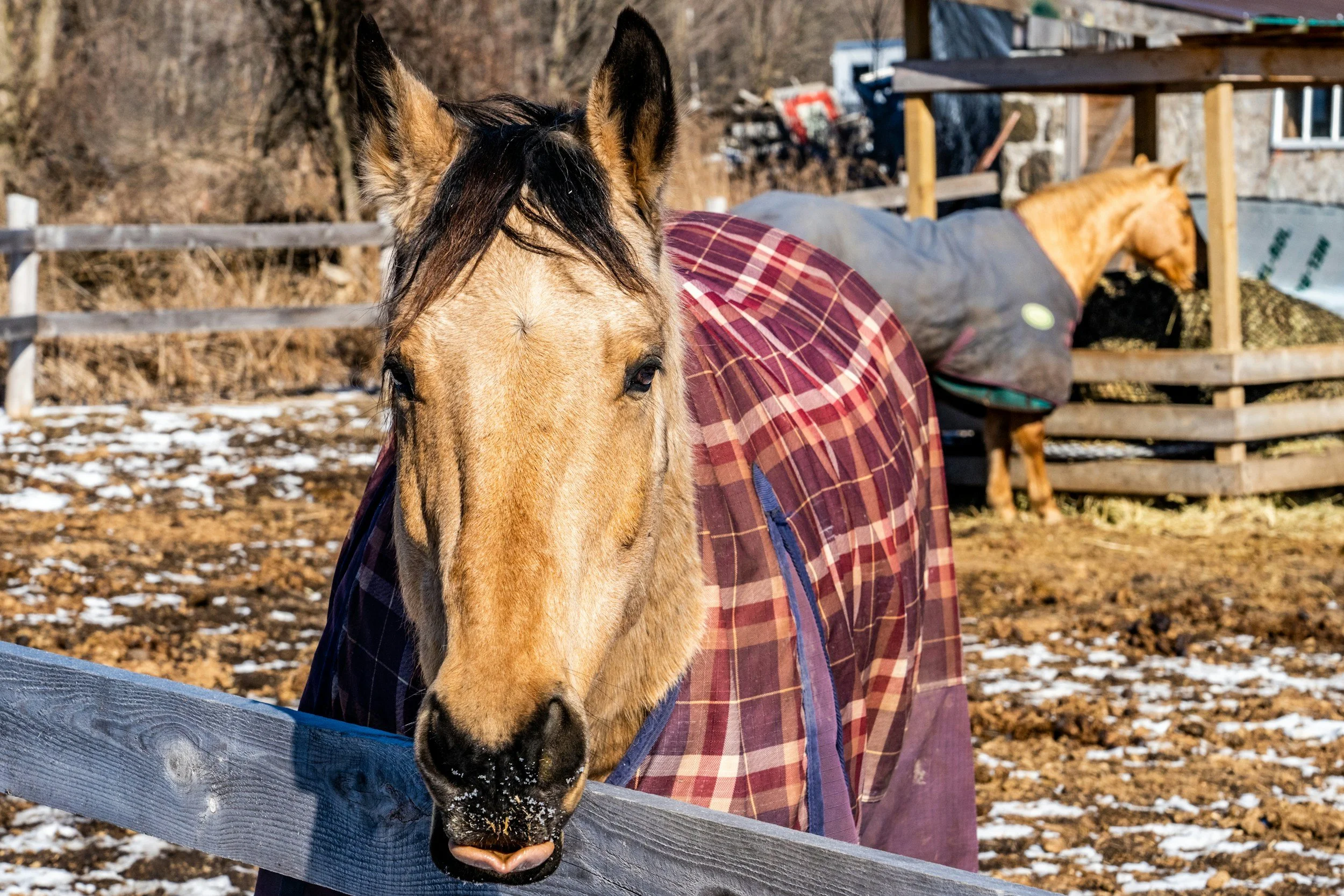
When winter arrives, your horse’s routine can change almost overnight. Shorter days make it harder to fit in a ride, frozen or muddy footing limits what you can safely do, turnout schedules may change, and horses can end up spending much more of the day standing around.
The temperature isn’t the only thing that changes in winter. Your horse’s overall amount of movement may change too.
That makes regular movement an important part of supporting horse joint health through the colder months. It doesn’t necessarily mean maintaining the same training schedule you had all summer. It means looking at how much your horse is moving throughout the week and finding safe, appropriate ways to keep their body active.
Movement Is Crucial for Healthy Joints
A healthy joint is designed to move.
Many of the joints we think about when discussing horse joint health are synovial joints. These include joints throughout the limbs, such as the fetlocks, knees, hocks, and stifles. Inside these joints, the ends of the bones are covered with articular cartilage and surrounded by a joint capsule containing synovial fluid.
Synovial fluid helps lubricate the surfaces within the joint, allowing them to move smoothly against one another. As your horse moves, joints are repeatedly loaded and unloaded. This normal mechanical loading influences the tissues within the joint and is part of maintaining joint homeostasis, or the balance that allows the joint to function normally. Research in horses has shown that exercise and biomechanical loading have a significant influence on the tissues that make up synovial joints.
That doesn't mean that more exercise is always better. Exercise intensity, duration, the individual horse, and the health of the joint all need to be considered. Research has also shown that strenuous exercise can negatively affect cartilage, which is why appropriate movement and conditioning are very different from simply working a horse harder.
But joints aren't structures we protect simply by avoiding movement. In fact, prolonged immobilization can negatively affect joint flexibility and cartilage, along with other tissues throughout the musculoskeletal system.
For most healthy horses, regular, appropriate movement is a normal part of keeping joints mobile and the body conditioned.
Winter Can Quietly Reduce Your Horse’s Movement
One of the biggest challenges with keeping horses moving in winter is that the decrease in activity isn't always obvious.
Your horse may still go outside every day, but turnout doesn't automatically mean they're moving as much as they did in warmer weather.
Think about what their pasture looked like in June compared with January. During warmer months, a horse might travel around grazing, walk between water and forage, interact with herd mates, and explore a larger pasture. In winter, they may be in a smaller paddock with hay conveniently located in one area. Add frozen ground, deep mud, snow, or ice, and there may be even less incentive—or opportunity—to move around.
Cold and poor footing can reduce movement during turnout, while winter weather can also mean horses spend more time in stalls.
Then there are the changes to our own schedules. There are fewer daylight hours, riding areas may be unavailable, and the workout you could easily fit in after work during July becomes much harder in December.
Instead of looking only at turnout hours, consider how much your horse is actually moving throughout their day and week. That gives you a much clearer picture of whether their activity level has changed.
Don’t Forget the Muscles That Support the Joints
Supporting your horse's joints also means thinking beyond the joint itself.
Muscles are part of the larger system that helps your horse stabilize their body, maintain posture and balance, and move efficiently. When a horse's normal workload drops significantly over winter, strength and conditioning can decline along with it.
This becomes especially relevant when we think about areas horse owners commonly want to support: the hocks, stifles, hips, shoulders, and back. These areas don't work independently. The way a horse carries and coordinates their entire body affects how they move through each stride.
That is one reason maintaining some level of purposeful exercise through winter can be so valuable. The goal doesn't have to be peak fitness or major strength gains. For many horses, simply maintaining more of the strength and conditioning they already have is worthwhile.
And you don't necessarily need a traditional riding workout to do it.
Winter Movement Doesn’t Have to Mean a Full Workout
When the weather is bad, it's easy to fall into an all-or-nothing mindset: either you have enough time and good enough footing for a complete workout, or your horse gets the day off.
There is a lot of useful space between those two options.
Depending on your horse’s fitness level, the footing, and any veterinary restrictions, winter movement might include turnout, hand walking, walking under saddle, groundwork, transitions, backing, gentle hill work, or ground poles.
And don't underestimate walking.
Walking isn't simply the five or ten minutes you do before the “real” workout starts. Walking is movement. It takes your horse's joints through repeated cycles of motion and can be used as part of a controlled exercise program. UC Davis veterinary guidance notes that walking is commonly used as the starting point for controlled equine exercise, with goals that include improving mobility and supporting fitness and tissue health.
A walking session can also become more purposeful without becoming more intense.
You might change direction, incorporate halt-to-walk and walk-to-halt transitions, ask for a few thoughtful steps of backing, walk over varied terrain, or use gentle inclines when the footing is safe. If you ride, you can simply extend your walking warm-up rather than feeling pressured to move quickly into faster work.
This can be particularly useful when horse stiffness in cold weather is a concern. A longer, gradual warm-up gives the horse time to move before more demanding work. Veterinary guidance recommends a thorough warm-up in cold weather, particularly for older horses, horses with arthritis or previous soft-tissue injuries, and those working less consistently during winter.
The goal isn't intensity for intensity's sake.
Consistent, appropriate movement counts.
Ten or twenty minutes of thoughtful movement may fit into a winter routine much more easily than waiting for the perfect day when you have enough daylight, perfect footing, and an hour to ride.
Make That Movement More Purposeful With Ground Poles
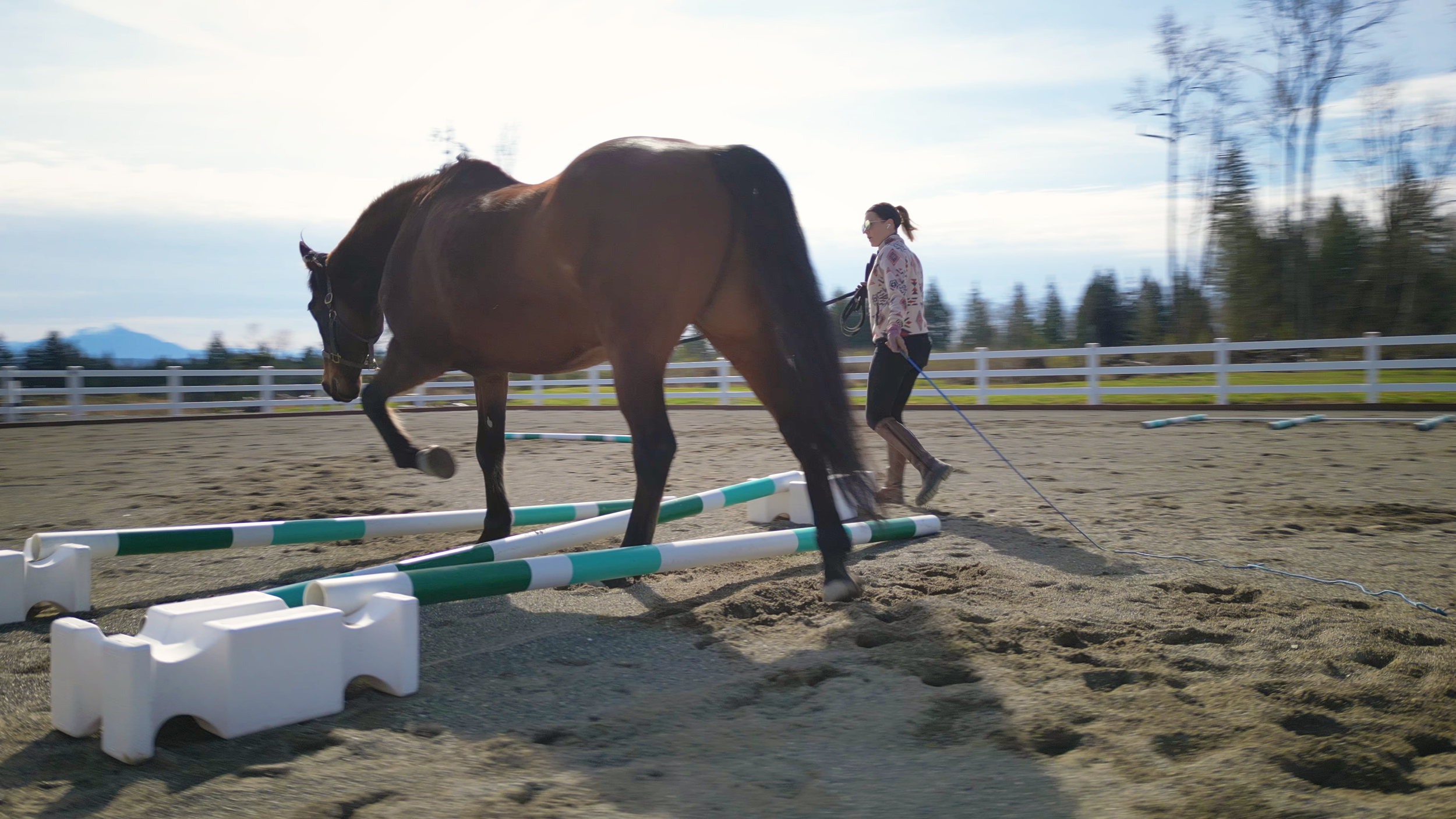
Once your horse is walking comfortably, ground poles are one way to make a relatively simple session more intentional.
Instead of simply walking from one end of the arena to the other, poles give the horse something to navigate. They have to organize their feet around an obstacle while maintaining their rhythm and coordinating the movement of their body.
And there is research behind their use.
A 2022 study examining horses walking over ground and raised poles found that poles increased limb joint range of motion through increased flexion during the swing phase of the stride. The researchers concluded that walking over poles can be useful in rehabilitation because of these changes in joint motion.
Pole work can also ask more of your horse's foot placement, balance, coordination, and body awareness. UC Davis includes ground poles and cavaletti among targeted therapeutic exercises used to work on range of motion, proprioceptive skills, and visuomotor coordination.
That doesn't mean you need an elaborate course of poles or an exhausting workout.
A few well-placed poles incorporated into a short walking or groundwork session can change what your horse is being asked to do with their body. The goal is to make the movement purposeful, not simply harder.
Keep Your Horse Moving Through Winter
Winter doesn't necessarily mean your horse needs harder workouts. It may mean you need to become more intentional about the movement they are getting.
Look at the whole week instead of worrying about completing a perfect workout every day. Turnout, walking, groundwork, longer warm-ups, and short, purposeful sessions can all help maintain activity when winter changes your normal routine.
Ground Pole Workouts gives you structured exercises designed to help your horse build and maintain strength, balance, coordination, and body awareness through purposeful movement.
Because sometimes, especially in winter, you don't need to do more, you just have to make it count.
If your horse develops new or worsening stiffness, lameness, joint swelling or heat, or other signs of pain, contact your veterinarian. Changes in movement shouldn't automatically be attributed to cold weather.