
Slow Down: Intentional Ground Pole Work Is So Valuable for Your Horse
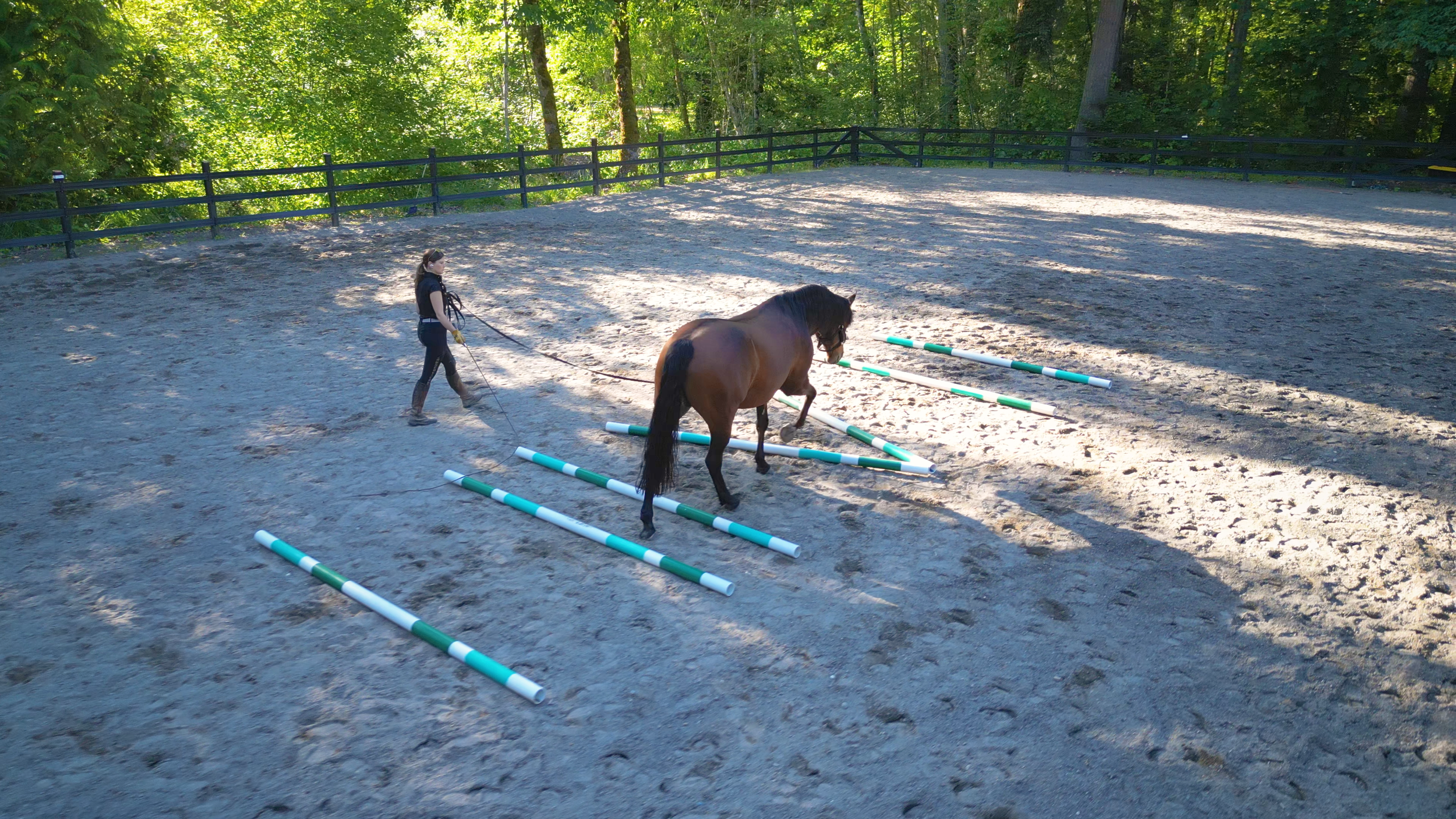
We've all watched a horse hurry through a line of ground poles, clip one with a hoof, or lose their rhythm halfway through. Sometimes they're so focused on getting to the other side that there's little opportunity to settle into a consistent pattern of movement.
It's easy to focus on getting through the exercise, particularly when we're working toward completing a particular pattern or number of repetitions. But the real value of ground pole exercises for horses comes from paying attention to how they move through each step.
A few thoughtful passes at a comfortable walk can tell us far more than repeatedly completing an exercise without considering the quality of the movement.
What Happens in Your Horse's Body When They Walk Over Ground Poles?
Walking over ground poles changes the way a horse organizes their limbs. To clear each pole, they must adjust their foot placement and increase flexion through several joints, including the carpus (knee), stifle, and hock.
This is where proprioception comes into the conversation. Proprioception is the nervous system's ability to sense where the body is positioned and how it's moving. When a horse approaches a pole, they must coordinate their limbs with the information their nervous system receives about their body and surroundings.
Research supports the biomechanical value of these exercises.
A 2022 study involving 41 horses found that walking over ground and raised poles increased joint range of motion, primarily because horses flexed their limbs more while lifting them over the poles. Raised poles produced greater changes than lower poles.
This doesn't automatically mean a horse becomes stronger or more flexible after a few sessions. It demonstrates that pole work can change how the joints move during the exercise.
Why Slower, More Intentional Movement Changes the Exercise
When a horse rushes through a line of poles, they may struggle to maintain a consistent rhythm or adjust their steps comfortably to the distances between them.
An unhurried, active walk gives the horse an opportunity to approach the exercise with a steadier rhythm and coordinate their foot placement without being pushed through the pattern.
That doesn't mean deliberately slowing the horse until they're taking tiny, restricted steps. The goal is to find a comfortable walking pace where the horse can continue moving forward naturally while negotiating each pole.
This is also why the number of repetitions shouldn't be our primary measure of success.
If a horse completes three passes while maintaining a comfortable rhythm and consistent movement, continuing for another ten may add little value, especially if fatigue begins affecting how they move.
The goal isn't to get through as many poles as possible. It's to make each pass purposeful.
Ground Pole Work Is About More Than the Legs
Although ground poles encourage changes in limb movement, the rest of the horse's body is involved, too.
The muscles of the trunk, back, and pelvis contribute to maintaining stability as the horse shifts weight and organizes each step. How comfortably a horse uses these areas can influence the way they approach and navigate an exercise.
Pole spacing also deserves attention.
A 2026 study examining different ground pole distances found that changing the spacing between poles influenced aspects of limb and spinal movement. Shorter spacing reduced some forward-and-backward limb movement, while longer distances increased extension through portions of the thoracic spine.
These findings reinforce why pole distances should be selected for the individual horse rather than assuming one arrangement will work for everyone.
As you watch your horse navigate ground poles, pay attention to the neck, back, shoulders, and hindquarters alongside the feet. You're observing how the entire body participates in the movement.
What Should You Look for During a Ground Pole Session?
You don't need specialized equipment to begin observing the quality of your horse's movement. Start with a simple arrangement of properly spaced poles and pay attention to four things.
Rhythm: Does your horse maintain a consistent, comfortable walk before, during, and after the poles?
Foot placement: Can they navigate the distances without repeatedly catching or knocking the poles?
Whole-body movement: Does the neck, back, and hindquarters appear to move comfortably throughout the exercise?
Comfort: Does your horse remain willing to participate, or do you notice increasing tension, fatigue, or difficulty?
If something changes, consider whether the spacing, exercise difficulty, or your horse's comfort needs attention. Persistent movement difficulties or signs of pain warrant veterinary assessment rather than additional repetitions.
Supporting Your Horse's Body Beyond the Poles
Purposeful movement and understanding your horse's body go hand in hand.
Ground Pole Workouts helps owners introduce structured exercises with an emphasis on movement quality, coordination, and choosing exercises appropriate for their horse.
Equine Bodywork Online complements that education by helping owners become more familiar with equine anatomy, recognize changes in muscular comfort, and learn gentle, supportive bodywork techniques.
Together, these programs encourage owners to look beyond whether their horse completed an exercise and begin understanding how their body performed it.
Because sometimes the most valuable thing you can do during a ground pole session is slow down enough to notice what's happening.
Explore Ground Pole Workouts and Equine Bodywork Online to learn how intentional movement and supportive bodywork can become part of your horse's regular care routine.