
How the Hamstrings Support the Stifle in Horses
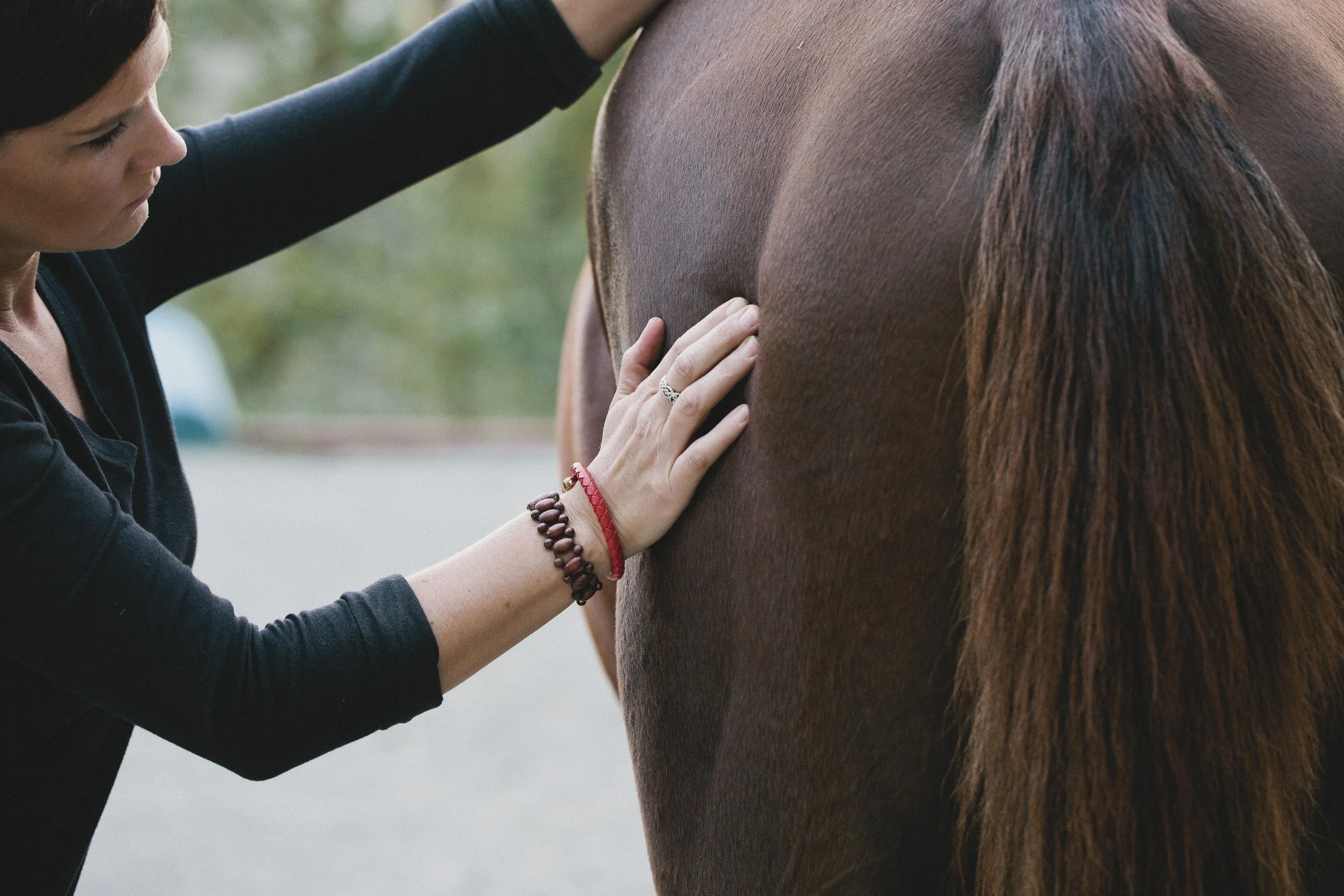
The hamstrings support the stifle in horses by helping bend the joint, control the hind leg, and manage the force created as the horse moves.
These large muscles cover much of the back and sides of the hindquarters. They connect the movement of the hip, stifle, and lower hind leg, which means they influence far more than the backward push of the stride.
When the hamstrings are working together well, they help the horse place the hind leg, carry weight, create power, and move the stifle with control.
What Are the Hamstrings in a Horse?
The horse’s hamstring group includes the biceps femoris, semitendinosus, and semimembranosus. These muscles run along the back and sides of the hindquarters. They cross more than one joint, so their role can change depending on the position of the horse’s leg and where the horse is within the stride.
For example, the hamstrings help bend the stifle while the hind leg is moving forward. They also help control how far the stifle straightens when the hoof is on the ground. This is why describing the hamstrings as muscles that simply bend the stifle does not tell the full story. They help guide and control the entire hind leg.
How Do the Hamstrings Support the Stifle?
The stifle is the large joint in the horse’s hind leg that is often compared to the human knee. It bends and straightens as the horse lifts the leg, places the hoof, carries weight, and pushes the body forward.
The hamstrings support this movement in several ways.
As the horse lifts the hind leg and brings it forward, the hamstrings help bend the stifle. As the hoof returns to the ground, they help control the leg and prevent the joint from straightening too quickly. They also help draw the hind leg backward beneath the horse. This contributes to propulsion, but it also helps the horse manage weight and remain balanced over the hindquarters.
The stifle and hock are closely connected in the horse. When one bends or straightens, the other follows through a system of tendons and muscles called the reciprocal apparatus. Because the hamstrings influence both the upper and lower portions of the hind leg, changes in their use can affect movement through the entire limb.
The Biceps Femoris and the Stifle
The biceps femoris is the largest and most visible muscle within the horse’s hamstring group. It covers much of the outside of the hindquarter, beginning near the pelvis and running down toward the stifle and lower hind leg. Its wide shape and multiple connections allow it to take part in several movements.
The biceps femoris helps move the hip, bend and control the stifle, and influence the hock. Its precise job changes depending on the position of the leg. When the hind leg is moving through the air, the biceps femoris helps bend the stifle and bring the limb through the stride. When the hoof is on the ground, it helps control the joint and move the horse forward.
This ability to perform different jobs makes the biceps femoris an important link between the pelvis, hip, stifle, and hock. It’s not just a power muscle. It also helps control how that power travels through the hind leg.
The Semitendinosus and Semimembranosus
The other two main hamstring muscles are the semitendinosus and semimembranosus.
The semitendinosus runs down the back of the thigh. It helps move the hind leg backward, bend the stifle, and support the push that moves the horse forward.
The semimembranosus sits along the back and inside of the thigh. It also helps move the hind leg backward and supports the horse as weight passes through the limb.
These muscles work alongside the biceps femoris rather than acting alone. Together, they help the horse move the leg with strength, balance, and control.
Hamstring Support Is
About More Than Strength
A horse can have large, well-developed hindquarters and still use the hamstrings unevenly.
Muscle size does not always tell us whether the horse is moving comfortably or using both sides of the body in the same way.
The hamstrings need strength, but they also need to lengthen, shorten, and respond as the leg moves. They must coordinate with the muscles of the pelvis, hip, back, stifle, and hock.
If one area is uncomfortable, tired, weak, or restricted, the horse may change how the hamstrings work.
For example, a horse may shorten the backward reach of one hind leg, place more weight on the opposite side, or tighten the hamstrings to protect another area.
This does not mean the hamstrings caused the original problem. Muscle tension can be part of a wider pattern of compensation.
What Uneven Hamstring Use Looks Like
Uneven hamstring use may show up as a change in movement, muscle development, posture, or response to touch.
You may notice:
One hind leg takes a shorter step
One hindquarter looks less developed
The horse has less push from one side
Backing becomes crooked or hesitant
Hills or transitions become more difficult
The horse rests the same hind leg often
One side of the hamstrings feels firmer or more sensitive
The horse has trouble holding up a hind hoof
These signs do not confirm a hamstring or stifle problem.
Similar changes can come from the hoof, hock, hip, pelvis, back, nervous system, or stifle joint itself. The value of observation is not that it gives you a diagnosis. It helps you notice when your horse has started using the body differently.
Can Tight Hamstrings Affect the Stifle?
Tight or overworked hamstrings can change how the horse bends, straightens, and controls the stifle.
If the muscles cannot lengthen comfortably, the horse may take a shorter step or avoid bringing the hind leg as far forward. If the muscles remain tense while the leg moves backward, the horse may lose some freedom through the hip and stifle.
However, tightness is information rather than a diagnosis.
The horse may be using the hamstrings differently because of fatigue, poor conditioning, hoof balance, soreness elsewhere, a previous injury, or discomfort within the stifle. Trying to stretch or release the muscles without understanding why they are tense may miss the larger pattern.
Sudden lameness, heat, swelling, repeated locking, trouble bearing weight, or a clear change in gait should be evaluated by a veterinarian before bodywork or exercise is added.
How Can Bodywork Support the Hamstrings?
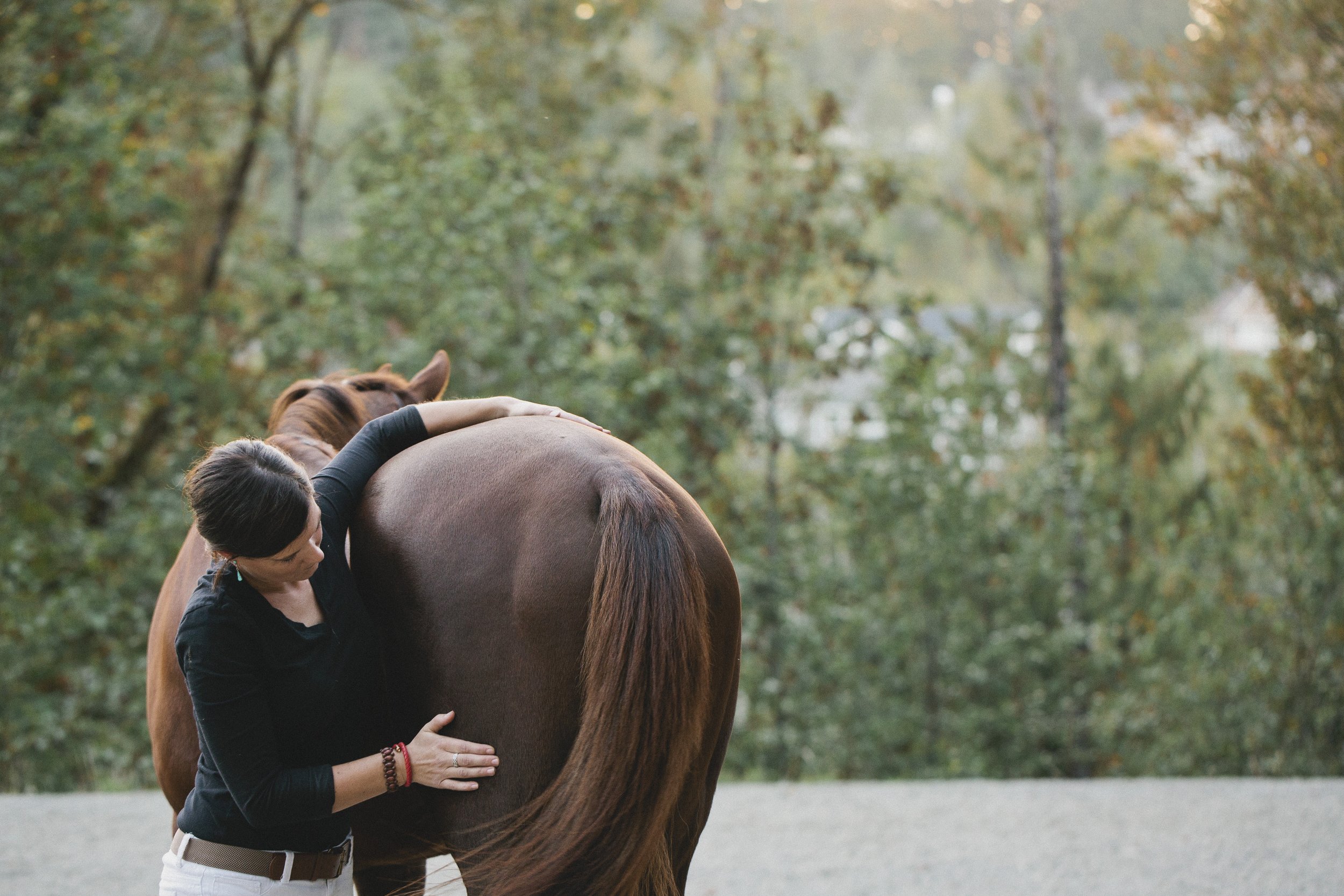
Bodywork can help you learn where the hamstrings are, how they feel, and how the left and right sides compare.
You may begin to notice that one side feels fuller, firmer, warmer, or more sensitive. You may also notice changes after hard work, time off, hill work, jumping, or a shift in your horse’s training.
Gentle bodywork can support comfort through the surrounding muscles, but the goal is not to force a tense muscle to release.
The horse’s response should guide the session. Bracing, moving away, pinning the ears, lifting the leg, or guarding the area may be signs that the pressure is too strong or that the area needs professional assessment. Bodywork is most helpful when it is used as part of a larger picture that includes veterinary care, hoof care, appropriate exercise, recovery, and good training.
The Hamstrings Are Part of a Larger Hind-End System
The hamstrings support the stifle, but they never do it alone. They work with the gluteals, quadriceps, inner-thigh muscles, gaskin muscles, abdominal muscles, back, pelvis, hock, and hoof.
This is why focusing on one tight spot can only tell you so much. To understand the stifle, you need to understand how the muscles above, behind, and below it work together. You also need to look at how the horse stands, carries weight, moves each hind leg, and responds to touch.
The more clearly you understand the hind end as a connected system, the easier it becomes to recognize when something has changed!
Frequently Asked Questions About Horse Hamstrings and the Stifle
What are the hamstring muscles in a horse?
The horse’s main hamstring muscles are the biceps femoris, semitendinosus, and semimembranosus. They run along the back and sides of the hindquarters and help control the hip, stifle, and lower hind leg.
How do the hamstrings support the stifle in horses?
The hamstrings help bend the stifle, control how the joint straightens, and guide the hind leg through each stride. They also help the horse move the leg backward and create power from behind.
What does the biceps femoris do in a horse?
The biceps femoris helps move the hind leg, support the stifle, and influence the hock. It also helps control the limb while the horse is carrying weight and pushing forward.
Can tight hamstrings affect a horse’s stifle?
Tight or overworked hamstrings may change how the horse bends and straightens the stifle. The horse may take a shorter step, show less reach through the hind leg, or move with less freedom behind.
However, tight hamstrings may be a response to discomfort somewhere else, so tension should not be treated as a diagnosis.
What are the signs of tight hamstrings in horses?
Possible signs include shorter steps behind, uneven hindquarter development, less push from one side, difficulty backing, trouble on hills, sensitivity to touch, or frequent resting of the same hind leg.
These signs can have many causes and do not always point to the hamstrings or stifle.
Can bodywork help a horse’s hamstrings?
Gentle bodywork may help support comfort in the hamstrings and help owners notice changes in muscle tone, sensitivity, and balance between the left and right sides.
Bodywork should not replace veterinary care when a horse is lame, painful, swollen, or showing a sudden change in movement.
What exercises help support the hamstrings and stifle?
For healthy horses, controlled hill work, backing, ground poles, balanced transitions, and slow strength-building exercises may help support the hind end.
Exercise should be introduced gradually. Horses with an injury or known stifle condition should follow a plan created by a veterinarian or rehabilitation professional.
Are strong hamstrings enough to support the stifle?
No. The hamstrings are only one part of the system supporting the stifle. The gluteals, quadriceps, inner-thigh muscles, gaskin muscles, pelvis, hock, back, and hooves all influence how the hind leg moves and carries weight.
When should I call a veterinarian about my horse’s stifle?
Contact your veterinarian if your horse shows sudden lameness, swelling, heat, repeated locking, trouble bearing weight, ongoing toe dragging, or a clear change in gait or performance.