
TMJ in Horses: Why It Matters for Comfort, Movement, and Performance
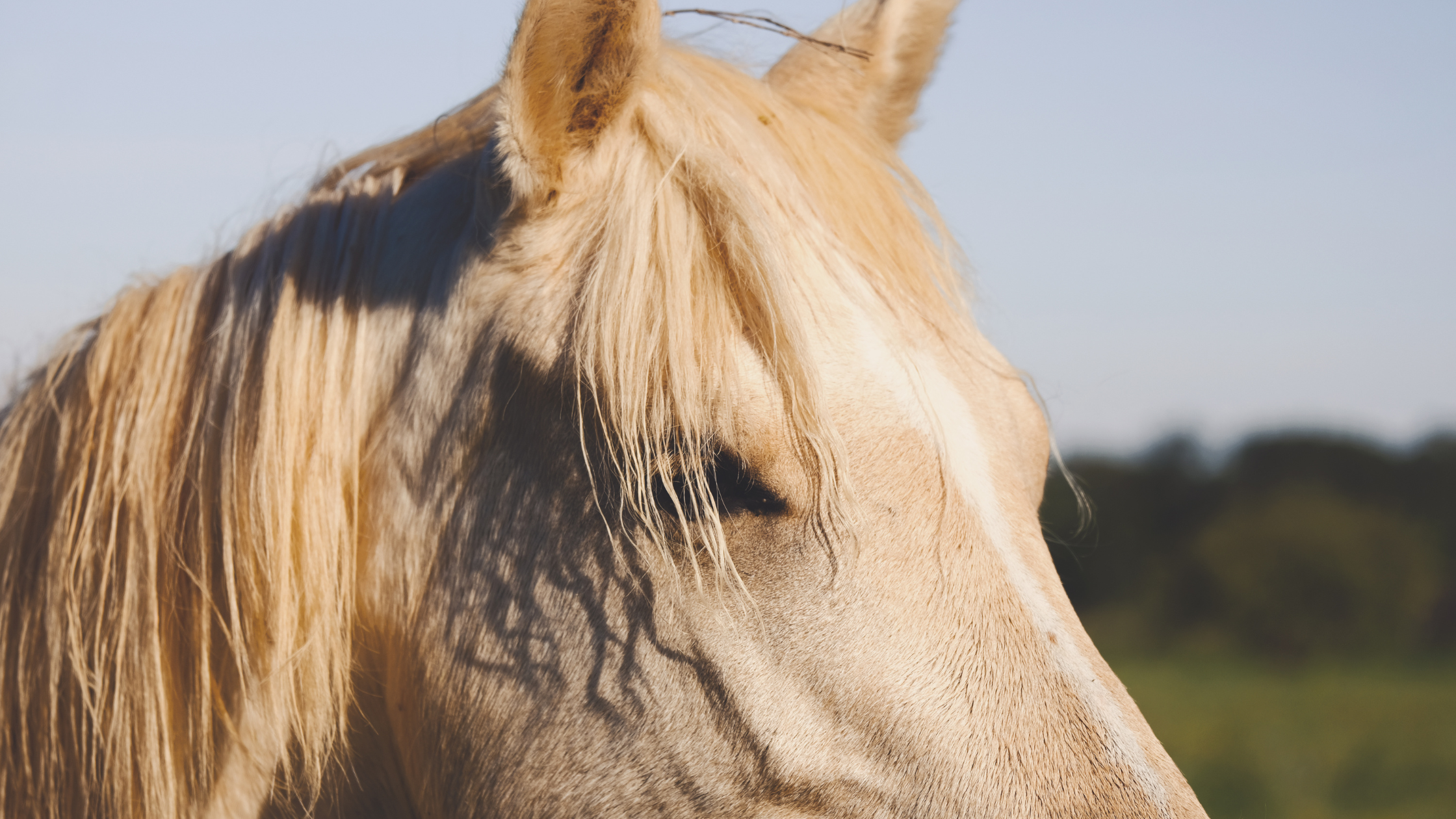
When a horse feels tight through the poll, inconsistent in the contact, or resistant in subtle ways, most riders look everywhere except the jaw. But the jaw is almost always part of the conversation.
The temporomandibular joint, or TMJ, is a small structure with a wide reach. It influences how the horse chews, carries the bit, organizes through the poll, and ultimately how the body moves as a whole. When it is functioning well, things tend to feel softer and more even. When it is not, the effects rarely stay isolated to the head.
Understanding TMJ in horses is all about seeing connections more clearly!
Understanding the Temporomandibular Joint in the Horse
The TMJ is the joint where the lower jaw meets the skull, just below the base of the ear. It is active all day long, whether the horse is eating, resting, or being ridden. Its job is simple in theory. It allows the jaw to open, close, and move slightly side to side. But functionally, it does much more than that.
Because of where it sits and how it connects, the TMJ plays a role in how the horse accepts contact, how the poll moves, and how tension is distributed through the upper neck. It is not just a chewing joint. It is part of how the horse organizes the front end of the body.
That is why horse TMJ issues often show up in ways that do not immediately point back to the jaw.
The Jaw–Poll–Neck Connection
The jaw, poll, and upper cervical spine are closely related both anatomically and functionally. When one area tightens, the others tend to follow. A horse that is holding tension in the jaw often shows it through the poll. The neck may feel braced. The connection in the reins may feel uneven. The horse may have difficulty truly softening forward and down.
This is not just about the head position. It is about how the body is organizing from front to back. When the jaw can move freely, it allows for more softness through the poll. When the poll is free, the neck can carry more naturally. And when that chain is functioning well, it becomes much easier for the horse to lift through the back and move with balance.
This is where small restrictions can start to have a much bigger impact.
When the TMJ Becomes a Limiting Factor
TMJ restriction rarely announces itself clearly. It tends to show up in ways that feel familiar, but not always easy to explain. Under saddle, you might feel a horse that is uneven in the contact, more resistant to flexion in one direction, or unable to fully release through the jaw. Some horses feel stuck at the poll. Others struggle to stay consistent in transitions. The softness comes and goes.
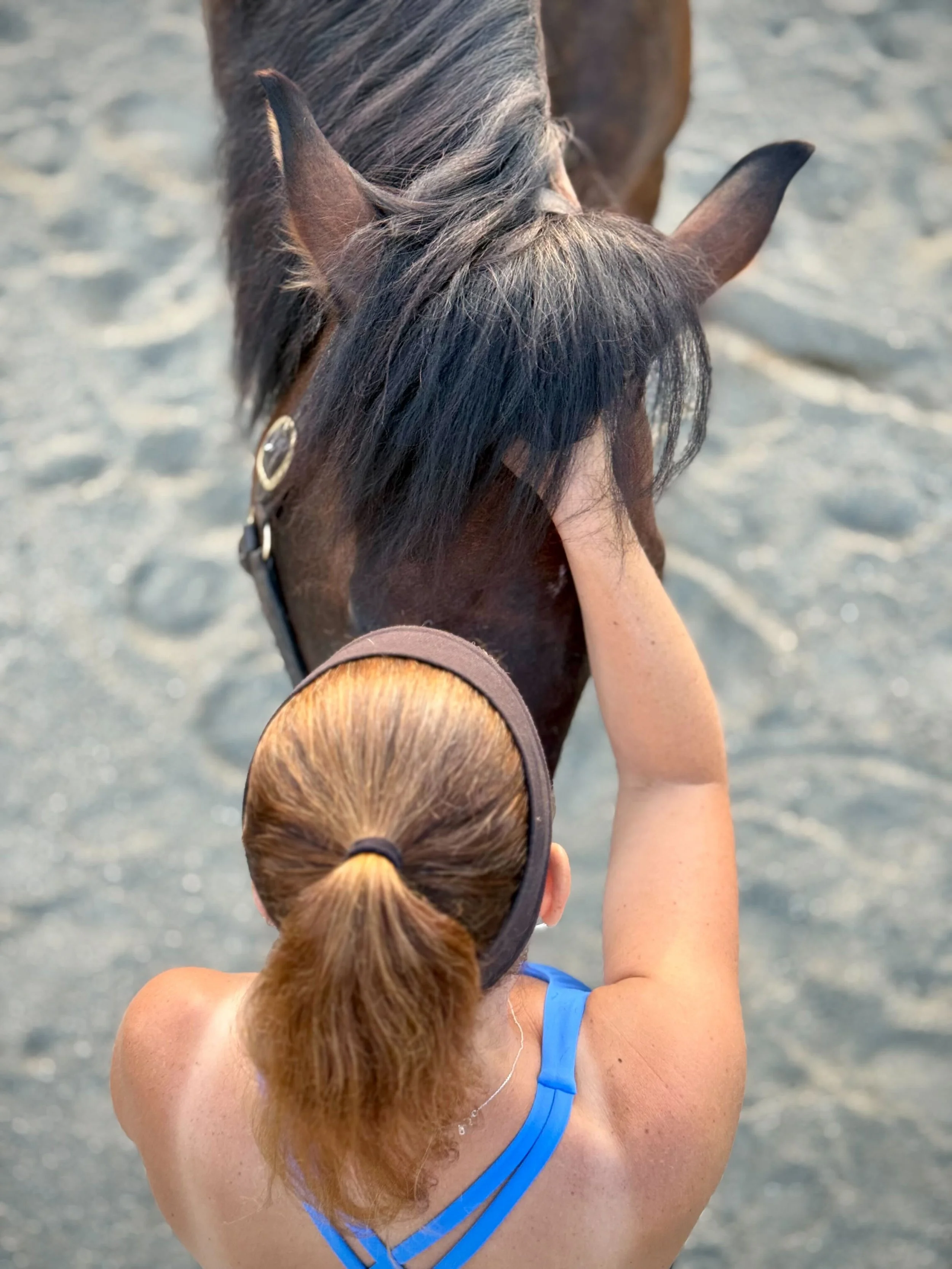
Outside of riding, you might notice changes in how the horse chews, subtle tension during bridling, or sensitivity around the jaw and throatlatch.
Why it’s so Easy to Misread TMJ Restriction
One of the reasons TMJ in horses is overlooked is because it rarely looks like a jaw issue on the surface.
It is often interpreted as a training problem. A horse that feels uneven in the contact may be labeled as stiff or resistant. A horse that braces at the poll may be seen as not accepting the bit.
The rider works on the symptom, not the source. Sometimes adjustments are made to tack. Sometimes more pressure is applied to “get through” the resistance. But if the underlying issue includes tension through the jaw, those approaches may not fully resolve the problem.
This is where understanding patterns matters. The horse is not just reacting. The body is compensating.
Contributing Factors: How Tension Develops Over Time
There is rarely a single cause of TMJ tension. More often, it develops gradually through a combination of influences.
Dental balance plays a role. Uneven wear or discomfort can change how the horse uses the jaw. Riding patterns matter as well. Inconsistent or restrictive contact can encourage bracing over time. Posture is another factor. A horse that moves in a hollow or guarded way will often carry that tension forward into the neck and jaw.
Stress also contributes. Horses frequently hold tension in the jaw when they are unsure, overstimulated, or trying to manage pressure.This is where the idea of TMJ horse treatment needs to be understood carefully. If there is true joint pathology or dental concern, that belongs with your veterinarian or equine dentist. But when the issue is largely soft tissue tension and compensation, the approach looks different.
That is where supportive work comes in.
Where Bodywork Supports the Horse
Bodywork focuses on the soft tissue surrounding the joint rather than the joint itself.
In the case of the TMJ, that means working with the muscles and fascia of the jaw, poll, throatlatch, and upper neck. When those tissues begin to soften, the horse often shows visible changes. The eye relaxes. The chewing becomes more even. The neck loses some of its brace. This does not replace veterinary or dental care. It supports what those professionals do by helping the body maintain a more comfortable baseline.
For many horses, this is the missing piece. Not because the jaw is the only issue, but because it was part of the pattern holding everything together.
Movement, Posture, and the Role of the Whole Body
The TMJ does not exist in isolation, and it cannot be fully addressed in isolation either.
A horse that is moving with tension through the back and hind end will often carry that tension forward into the neck and jaw. The reverse is also true. When the front end is braced, it becomes harder for the horse to organize the rest of the body. This is where groundwork and pole work come in.
Through Ground Pole Workouts and thoughtful movement patterns, the horse learns to organize more evenly from behind. As the body begins to function more efficiently, the need for tension decreases. And when that tension decreases, the jaw is often one of the first places to soften. Movement supports release just as much as hands-on work does.
What This Means in Practice
For the rider or owner, this is less about doing more and more about seeing more clearly.
It means paying attention to patterns instead of isolated moments. It means noticing when the horse feels different, not just when something goes wrong. It means understanding that a tight jaw may not be about the mouth at all. When you start looking at the TMJ as part of the whole system, your approach to training and care naturally shifts. You begin to ask better questions, and your decisions become more informed.
Seeing the TMJ as Part of the Whole Horse
The TMJ is a small joint, but it has a wide influence.
It affects how the horse feels in the bridle, how the poll moves, and how tension travels through the body. It connects to posture, movement, and the way the horse responds to both physical and emotional pressure.
When you understand TMJ in horses, you stop chasing individual symptoms and start recognizing patterns. If you want to better understand how the jaw, poll, and body connect, Equine Bodywork Online gives you a clear, structured way to learn. It helps you develop the awareness to recognize tension early and support your horse with more confidence.
Sometimes the smallest areas are the ones that change everything.
Frequently Asked Questions
What is TMJ in horses?
TMJ in horses refers to the temporomandibular joint, which connects the lower jaw to the skull and plays a role in chewing, jaw movement, and poll function.
How do I know if my horse has a TMJ issue?
You may notice uneven contact, resistance in flexion, tension at the poll, or changes in chewing behavior. These signs should be evaluated as part of the whole horse.
Is horse TMJ the same as a dental problem?
Not always. Dental issues can contribute to TMJ tension, but soft tissue restriction and compensation patterns can also play a role.
What about TMJ horse treatment?
If there is suspected joint or dental pathology, your veterinarian or equine dentist should be involved. Bodywork can support surrounding tissues but does not replace medical care.