
The Stifle Explained: How This Joint Affects Movement, Balance, and Performance
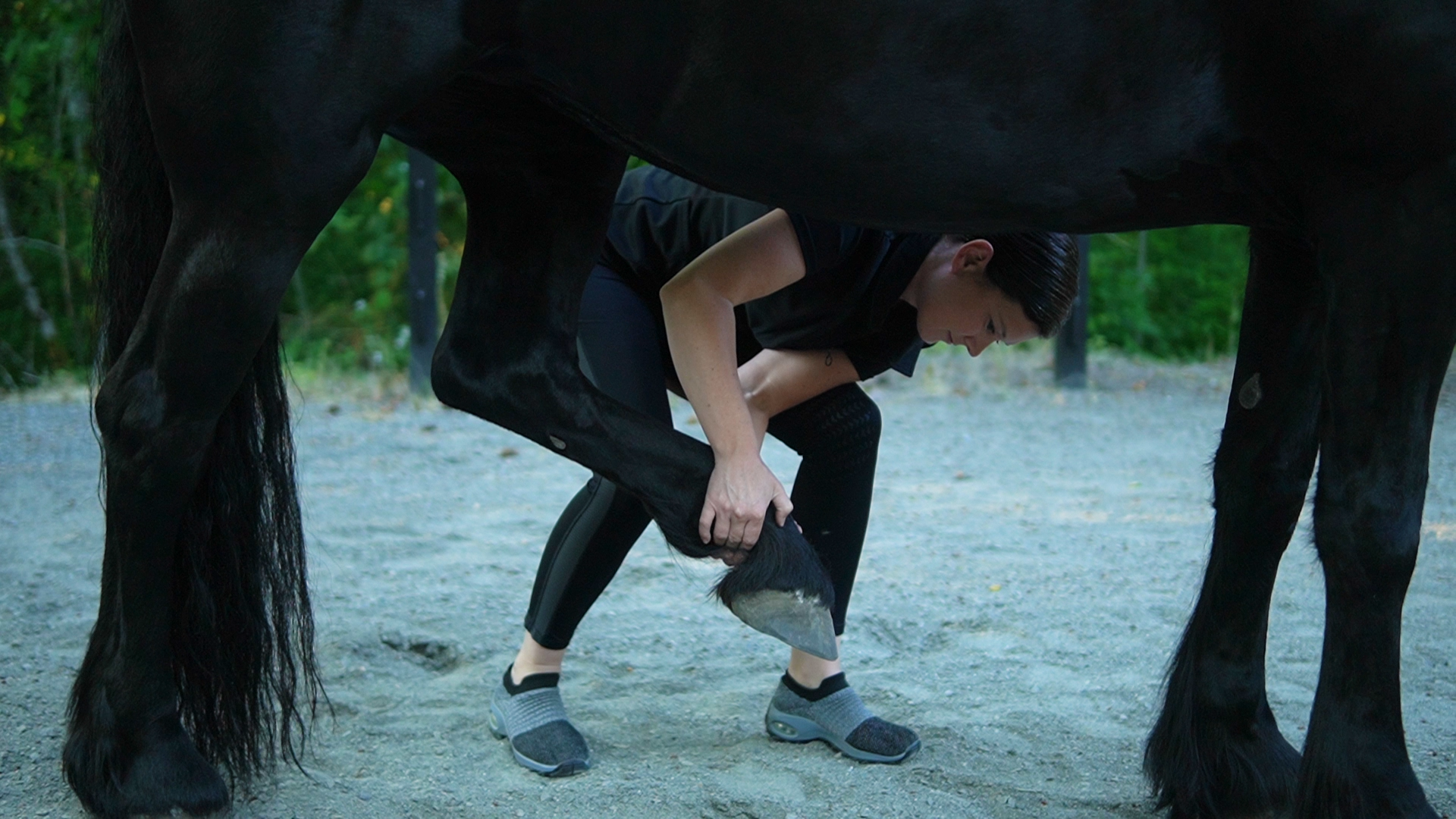
If you’ve ever said, “My horse just feels weak in the hind end,” there’s a good chance the stifle is part of that conversation.
The stifle is one of the most important joints in the horse’s body, and most riders don’t think about it until something goes wrong. But when you understand horse stifle anatomy, you start seeing movement differently.
The stifle influences how your horse pushes forward, steps under, lifts through the back, and carries you. When it works well, everything feels smoother. When it doesn’t, the signs are often subtle at first.
Let’s break this down clearly so you can understand what’s happening in your horse’s body and what you can do about it.
Why the Stifle Is Such a Big Deal
The stifle is the largest joint in the horse’s body. It works like a hinge, similar to your knee. But it does more than just bend and straighten.
It connects the thigh bone to the lower leg and acts as a major link between the pelvis and the hock. Because of that, it plays a key role in how power moves through the hind end.
When the stifle bends and straightens properly, the hind leg can step underneath the horse’s body. That’s what allows for engagement, balance, and real impulsion.
Research looking at how horses move shows that the hip, stifle, and hock have to work together in a very coordinated way for proper hind limb engagement. If the stifle doesn’t flex well, the whole system starts to compensate.
And that’s when you might feel:
• A horse who trails behind instead of stepping under
• A canter that feels flat
• Trouble holding a lead
• A back that feels tight
• Transitions that feel sticky
It’s important to know that this rarely begins with overnight lameness.
A Simple Breakdown of Horse Stifle Anatomy
Let’s keep this clear and simple.
The equine stifle joint includes:
• The femur
• The tibia
• The patella
• Ligaments
• Cartilage structures called menisci
It actually has two joint spaces inside it, which allow it to handle both forward motion and slight rotation. That’s part of what makes it powerful, but also complex.
One unique feature of the stifle is its role in the stay apparatus. Horses can lock the patella in place so they can rest while standing. It’s a survival feature.
But sometimes that locking system doesn’t release smoothly. That’s called upward fixation of the patella, and it’s one of the more common stifle issues in horses.
Also important: the stifle and hock are mechanically connected. When the stifle bends, the hock bends. When the stifle straightens, the hock straightens.
So if you see a hock issue, you should also be thinking about the stifle.
What Stifle Problems Often Look Like
Here’s what’s tricky. Stifle issues in horses often don’t look dramatic.
Veterinary research shows that stifle injuries can present as vague or intermittent hind limb lameness. That means the horse might not look obviously lame every day.
Instead, you may notice:
• Toe dragging
• A weaker push-off behind
• Difficulty picking up or holding a lead
• Resistance in downward transitions
• Trouble backing
• Loss of impulsion
Meniscal injuries and ligament strains are among the more common causes of stifle-related lameness in sport horses.
If you suspect injury, this is always a veterinary conversation first. Conditioning supports health. It does not diagnose or replace medical care.
How the Stifle Affects Balance and Topline
Now let’s connect this to what you feel under saddle.
When the stifle flexes well, the hind leg can step farther under the body. Studies on equine gait confirms that increased stifle flexion improves hind limb protraction, which supports better balance.
If the stifle doesn’t flex enough, the hind leg stays out behind. That makes it hard for the pelvis to tilt properly and hard for the back to lift.
Over time, this affects topline development. This is why strengthening the hind limb matters.
Studies looking at pole work show that walking and trotting over poles increases joint flexion in the hind limb without adding excessive strain.
This is where Ground Pole Workouts and structured topline training fit in. The goal isn’t forcing engagement. It’s building strength gradually so the stifle can support the back more effectively.
Practical Ways to Support Stifle Strength
You don’t need fancy tools. You need consistency and smart programming.
1. Gentle Hill Work
Walking up gentle hills with very little slope to increase stifle and hock flexion and strengthen key hind limb muscles.
2. Progressive Pole Work
Start with flat poles. Keep them spaced appropriately. Focus on rhythm, not height.
3. Longer Warm-Ups
Warm-up increases circulation and improves joint lubrication before harder work. This is especially important in colder months.
4. Straightness Matters
Crooked horses load joints unevenly. Balanced straight lines help distribute pressure more evenly through the stifle.
5. Avoid Fatigue
Tired muscles mean less joint stability. That increases stress on ligaments.
Strength builds slowly, and that’s normal.
The Bigger Picture
Understanding horse stifle anatomy changes how you train. Instead of pushing for more collection, you start asking:
Can the hind limb physically support this?
Is the joint strong enough yet?
Have I built the foundation?
Small improvements in stifle strength protect long-term soundness. Support the engine first. Performance follows!
Frequently Asked Questions
What is the equine stifle joint?
It’s the large joint in the hind limb that functions like a knee. It connects the femur to the tibia and plays a major role in propulsion and balance.
How do I know if my horse has stifle issues?
Look for subtle signs like toe dragging, weak push-off, inconsistent leads, or difficulty in transitions. Always consult a vet for diagnosis.
Can pole work help the stifle?
Yes, when introduced gradually. Pole work encourages controlled flexion of the stifle and hock.
Why does the stifle affect the topline?
If the stifle doesn’t flex well, the hind leg can’t step under. That makes it harder for the back to lift and the topline to develop properly.