
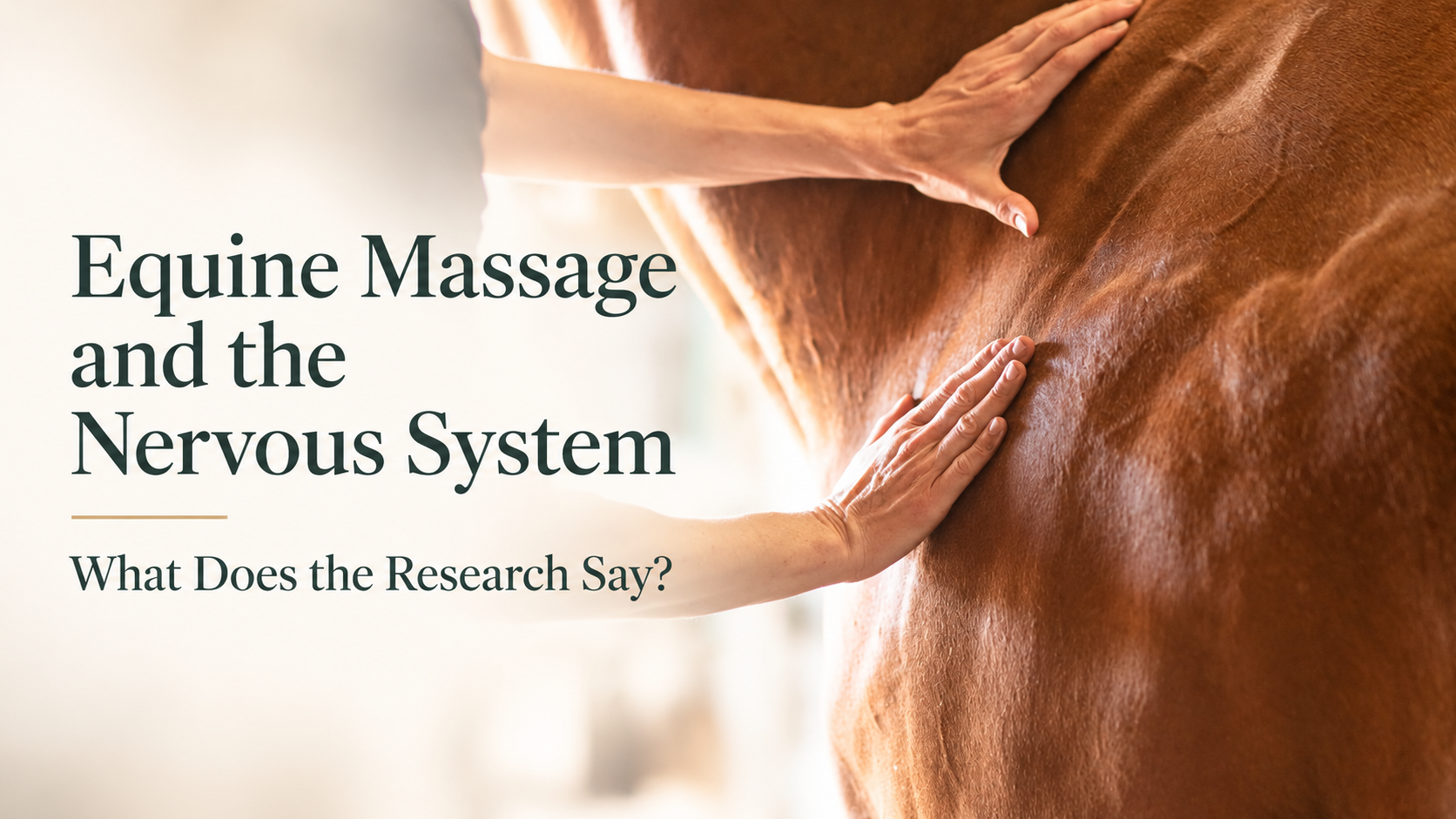
When we think about equine massage, we often think about relieving muscle tension, supporting movement, or helping a horse recover after exercise. While these are familiar reasons to explore bodywork, researchers are also investigating how massage influences the nervous system.
The connection is particularly interesting because horses respond to their environments through both physical and physiological processes. Their muscles, sensory systems, cardiovascular activity, and emotional responses are continually working together.
Research suggests that equine massage can influence certain physiological indicators associated with relaxation and stress. Studies have documented changes in heart rate, heart-rate variability, cortisol concentrations, and even pupil size following massage.
Understanding these findings gives us a broader perspective on the potential benefits of equine massage and why a horse's response to touch deserves as much attention as the technique itself.
Understanding the Equine Nervous System
The autonomic nervous system regulates many of the body's involuntary functions, including heart rate, digestion, and physiological responses to stress.
Two important components are the sympathetic and parasympathetic nervous systems.
The sympathetic nervous system helps prepare the horse to respond to physical and environmental demands. When a horse encounters something unfamiliar or potentially threatening, sympathetic activity contributes to the physiological changes that support alertness and action.
The parasympathetic nervous system participates in processes associated with rest, digestion, and recovery. It helps regulate cardiac activity and supports the body's return toward baseline following periods of activation.
Both systems are necessary for normal functioning. A healthy nervous system isn't one that remains relaxed all the time, but one that responds appropriately to changing circumstances.
Massage introduces sensory stimulation through the skin and underlying tissues. This information travels through peripheral nerves and is processed by the central nervous system.
Depending on the horse's physical comfort, emotional state, previous experiences, and perception of the interaction, that sensory input can contribute to different physiological responses.
What Research Reveals About Equine Massage and Relaxation
Massage and Heart-Rate Variability
A 2017 study published in Animal Science Journal examined the effects of relaxing massage on 72 Arabian racehorses throughout their first racing season.
All horses participated in regular training, but the experimental group also received massage three times per week.
Researchers measured heart rate and heart-rate variability during activities including grooming, saddling, and ridden warm-up.
Heart-rate variability, or HRV, measures the variation in time between consecutive heartbeats. Certain HRV measurements can provide information about autonomic nervous system activity, including parasympathetic influences on the heart.
The researchers observed changes consistent with greater relaxation in the horses receiving regular massage. These horses also had better racing performance records, although that finding doesn't establish that massage directly improved performance.
The study offers encouraging evidence that massage can influence physiological indicators associated with a horse's response to its working environment.
Massage and Cortisol Levels
A more recent 2025 study published in Animals investigated the effects of massage on stress-related indicators in five recreational horses.
Researchers compared conditions with and without massage before ridden exercise, measuring salivary cortisol, heart rate, and behavior.
Cortisol is a hormone involved in the body's physiological stress response. Although cortisol serves several important functions, changes in its concentration can help researchers understand how animals respond to different experiences.
The study documented reductions in cortisol following massage, alongside fewer conflict-related behaviors, including tail swishing, head tossing, and ear pinning.
These findings suggest that massage could contribute to a reduction in physiological stress under certain conditions.
However, because only five horses participated, larger studies are needed before drawing broad conclusions about its effects.
Massage and Pupil Size
One particularly interesting 2023 study published in Scientific Reports explored whether massage could influence pupil size in horses.
Pupil size is partially regulated by the autonomic nervous system, making it a useful potential indicator of physiological activity.
Researchers photographed horses' eyes before and after massage under controlled lighting conditions.
In the massage group, normalized pupil area decreased by an average of approximately 22%. Researchers interpreted this finding as consistent with a shift toward greater parasympathetic influence.
Although the study was relatively small, it provides another example of how researchers are investigating the nervous system's response to equine bodywork.
Importantly, these findings don't establish that massage directly stimulates the vagus nerve or creates lasting changes in autonomic regulation.
Why the Horse's Experience of Touch Matters
While research provides evidence that massage can encourage relaxation, it also reminds us that not all physical contact produces the same response.
A 2004 study published in the Journal of Equine Veterinary Science examined how massage at different anatomical locations affected heart rate and behavior.
Researchers worked with ten horses and ponies, applying massage to six areas of the body.
Massage at five of the six locations produced significant reductions in heart rate, with particularly favorable responses at the withers, mid-neck, and croup.
Interestingly, these areas are associated with locations horses often prefer during mutual grooming.
This suggests that the location and nature of physical contact can influence how a horse responds physiologically.
However, every horse brings its own experiences and preferences to an interaction. A horse experiencing soreness, heightened arousal, or discomfort with handling might respond very differently to touch than a relaxed horse voluntarily seeking contact.
Rather than assuming a particular technique will produce relaxation, owners should consider the horse's behavior throughout the interaction.
Recognizing Your Horse's Response to Bodywork
When practicing gentle bodywork, it can be helpful to observe your horse before, during, and after contact.
Notice their breathing, posture, facial expression, and muscle tone. Consider whether they willingly remain engaged or repeatedly move away from the interaction.
Some horses demonstrate softer facial expressions, lowered head positions, or changes in breathing during comfortable physical contact. Others might shift their weight, turn toward the person providing touch, or simply remain quietly attentive.
These observations provide useful information, but individual behaviors such as yawning, licking, or chewing shouldn't automatically be interpreted as evidence of parasympathetic activation.
The complete picture is more informative than any single response.
Allowing the horse to move away and respecting their preferences helps ensure that bodywork remains a supportive experience rather than another source of unwanted pressure.
Supporting the Whole Horse Through Equine Bodywork
The research surrounding equine massage and nervous system regulation continues to develop. While larger studies are needed, existing findings suggest that thoughtfully applied massage can influence physiological indicators associated with relaxation and stress responses.
Perhaps the most valuable lesson is that effective bodywork involves more than understanding muscles and techniques. It also requires observing the horse receiving that touch and recognizing how physical comfort and emotional state influence one another.
At Equine Bodywork Online, we help horse owners become more confident understanding their horse's body and incorporating supportive hands-on care into everyday routines.
With guided bodywork techniques covering more than 40 areas and series throughout the horse's body, EBO gives you practical resources to return to as your horse's needs change.
Whether you're supporting an active horse, an aging companion, or simply hoping to better understand the connection between physical comfort and behavior, learning to observe and respond to your horse is an important place to begin.
Explore Equine Bodywork Online and discover how thoughtful, horse-centered bodywork can become part of your everyday care routine.