Common Signs Your Horse Is Holding Tension
Horses are very good at holding things in. Pain, stress, and physical tension often stay hidden until they spill over as “behavior problems” or performance issues. Many owners only realize something is wrong when a horse starts refusing jumps, pinning ears under saddle, or acting suddenly spooky.
A horse holding tension usually shows small signs long before that. Subtle changes in expression, posture, or movement can tell you a lot about how your horse feels, both physically and emotionally.
In this short guide, we will look at common signs of tension and imbalances in horses, what current research says about pain and stress signals, and how equine bodywork can support release and comfort!
Reading tension is important.
Tension is not just a “tight muscle.” It is often a mix of physical discomfort, emotional stress, and compensation from old injuries or imbalance. Over time, that tension can lead to:
Changes in posture and movement
Uneven muscle development
Shortened stride or irregular rhythm
Behavior that looks like resistance but is really discomfort
A growing body of research links facial expressions and body posture to pain in horses. Studies have shown that orthopedic pain is associated with specific changes in facial expression and body behaviors, including asymmetry, guarded posture, and altered interaction with the handler.
Other work on the “equine pain face” found that tense facial muscles, backward ears, dilated nostrils, and wrinkles above the eye are reliable indicators of discomfort.
When you can recognize these early signs of tension, you are more likely to:
Catch pain before it becomes lameness
Adjust training before your horse feels overwhelmed
Seek help from your vet or bodyworker sooner
That is why learning to read tension is one of the most powerful skills an owner can develop.
Rethinking resistance.
Many riders grow up hearing that horses who buck, rush, or ignore aids are “lazy,” “stubborn,” or “disrespectful.” Yet research and clinical experience say something very different.
Sue Dyson’s ridden horse pain ethogram, which identifies 24 behaviors linked with musculoskeletal pain, has shown that a high number of so-called “naughty” behaviors under saddle often reflect underlying discomfort. Horses that tail swish, put ears back, open the mouth, or show inconsistent rhythm are more likely to be in pain.
Reviews on equine pain also emphasize that behaviors such as reluctance to move forward, changes in head carriage, tension in the neck, and guarding of certain body parts are red flags, not training problems.
In other words, resistance is often communication. When we label it as attitude, we risk missing the real message:
“My back hurts when you sit the trot like this.”
“This saddle pinches when I lift my shoulder.”
“I cannot bend that way because something feels wrong.”
Seeing behavior through this lens creates more empathy and leads to better decisions for your horse’s body.
What science tells us about tension, pain, and stress.
Several research areas help us understand how tension shows up in horses.
Facial expressions and pain:
Studies on the equine pain face, as briefly referenced earlier, describe consistent changes during pain, including:
Tense muscles around the eye
Partially closed or worried eyes
Tense chin and tightened chewing muscles
Asymmetrical or backward ears
These facial signs often appear along with protective body postures, such as a guarded stance or reluctance to move.
Muscular and myofascial tension.
Myofascial pain and trigger points have been documented in horses. Research on trigger points in pectoral muscles and other regions shows that painful spots in muscle and fascia can limit motion and contribute to aversive behaviors when girthing or under saddle.
More recent studies on myofascial pain and dry needling report that releasing these trigger points can reduce pain sensitivity and improve muscle function and biomechanics.
Tension as a marker of stress.
Muscular tension is also linked to acute stress. A 2022 study on horses under controlled stress found that increases in muscle tension occurred alongside elevated cortisol and behavioral signs of stress.
Reviews of stress behavior highlight signs such as a high head, stiff neck, clamped tail, facial tension, and a guarded posture as indicators that a horse is not relaxed.
Taken together, these findings show that “horse holding tension” is not just a feeling. It has measurable effects in muscle tissue, facial expression, posture, and behavior.
Everyday signs your horse may be holding tension.
Every horse is different, but there are common patterns that suggest tension or imbalance. None of these signs alone proves pain, yet clusters of them are worth paying attention to and discussing with your vet or qualified practitioner.
In the body.
A consistently high head and tight underside of the neck
One shoulder that always looks bigger or more developed
A dipped back or tight, braced topline
Shortened stride, especially in one hind leg
Difficulty stepping under or bending in one direction
Tail held to one side, clamped, or swishing persistently
In handling and grooming.
Flinching, pinning ears, or moving away when you touch certain areas
Girthiness or aggressive responses when saddling
Difficulty picking up a particular hoof
Leaning heavily on one leg while resting
In expression and behavior.
Eyes that look “worried,” with wrinkles above the eyelid
Tight muzzle, straight lip line, or grinding teeth
Increased spookiness in familiar environments
Resistance when asked to go forward or downward transitions that feel sticky
Changes in attitude, such as irritability or withdrawal
These are exactly the kinds of behaviors that checklists for equine pain and discomfort ask owners to notice.
If you recognize several of these in your horse, it does not mean something is “wrong with them.” It means their body is asking for help.
How equine bodywork helps horses release tension.
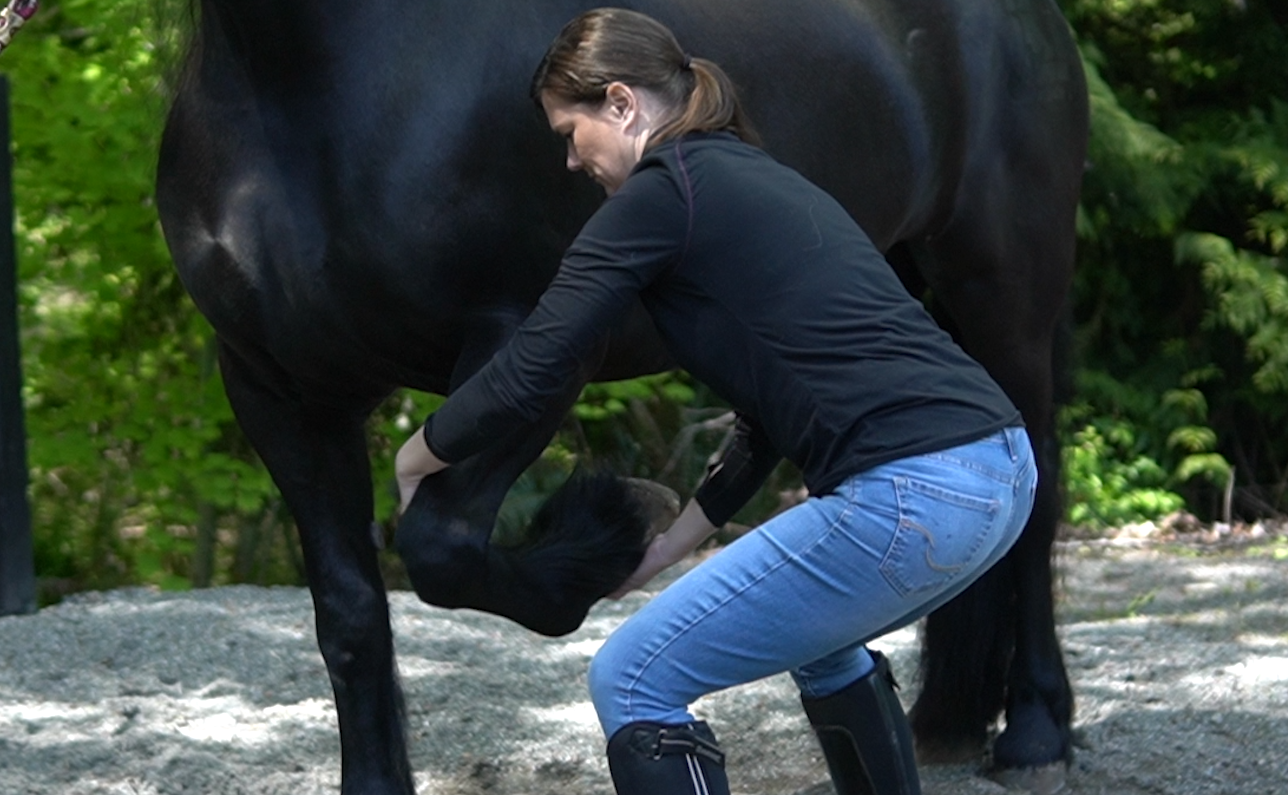
Equine bodywork is not a replacement for veterinary care, but it is a powerful partner. Manual therapies, when used alongside vet and saddle fit support, can ease muscular and fascial tension and help the nervous system settle.
Recent work on manual therapy in horses exposed to racing and training found that sessions were associated with increased signs of relaxation, changes in posture, and reduced stress behaviors.
Techniques commonly used in equine bodywork include:
Massage to increase circulation and relieve muscle tightness
Myofascial release to restore glide between tissues
Stretching and mobilization exercises
Gentle work around the poll, jaw, and ribcage to support breathing and balance
Over time, bodywork helps:
Improve range of motion and comfort
Reduce guarding and defensive behavior
Support more symmetrical muscle development
Encourage a calmer, more regulated nervous system
Many owners also notice changes in themselves! Slowing down, observing, and using mindful touch builds a quieter connection that benefits both horse and human.
What experienced practitioners notice in tense horses.
Bodyworkers and behavior focused professionals often see the same patterns over and over. A horse that kicks out at the leg aid may have tight hip flexors. One that cannot stretch into the contact may be protecting a sore back or locked poll.
Practitioners often describe a turning point when a horse realizes that touch is not going to force them, but help them. Muscles soften. Breathing deepens. The eye softens. This shift can be just as important as the physical change.
At Equine Bodywork Online, the focus is on teaching owners to recognize these patterns and support their horses with safe, thoughtful techniques, always in partnership with veterinary care.
Small adjustments that change everything.
Tension and imbalance do not appear overnight. They build slowly through training patterns, saddle fit, hoof balance, past injuries, and stress. The good news is that small, steady changes add up in the same way.
When you learn to see the early signs of tension, you can:
Adjust workload before your horse is sore
Ask your vet, farrier, or saddle fitter to investigate a specific concern
Use bodywork and movement exercises to help your horse rebalance
Support your horse emotionally by responding instead of pushing through
Over time, this approach protects soundness, supports performance, and deepens trust. Your horse learns that you notice and care when something feels off. That is the foundation of true partnership.
Start reading your horse’s body more clearly.
If you would like to understand your horse’s body language on a deeper level and learn safe ways to support release, explore the educational resources at Equine Bodywork Online.
You will find practical lessons that help you recognize tension, support relaxation, and work alongside your veterinary team to keep your horse comfortable.
Frequently asked questions about tension and imbalances in horses.
How do I know if my horse’s tension is pain or just behavior?
Behavior and pain are often linked. If you notice persistent changes in movement, posture, or attitude, especially under saddle, it is wise to involve your veterinarian. Tools like the ridden horse pain ethogram show that many “behavior” issues are associated with discomfort.
Can tension exist even if my horse is not lame?
Yes. Horses can carry significant muscular or myofascial tension without obvious lameness. Early signs often show up as stiffness, reluctance to bend, or subtle changes in expression and willingness.
When should I call my vet instead of a bodyworker?
Call your vet first if you see sudden lameness, heat, swelling, or significant behavior changes. Bodywork is an excellent addition once your vet has ruled out or addressed medical issues.
How often should a horse receive bodywork?
It depends on age, workload, and history. Performance horses may benefit from regular sessions, while others do well with occasional check ins. Your practitioner can help design a plan that fits your horse.
Can I learn to help my horse release tension at home?
Yes. With good guidance, owners can safely use simple bodywork and observation techniques to support relaxation between professional visits. Education is key so that you work with, not against, your horse’s body.
In closing.
Your horse is always speaking through posture, expression, and movement. When you learn to recognize the signs of tension and imbalance, you give them a powerful gift. You show them that you are listening and that their comfort matters as much as their performance.
Give us a try at Equine Bodywork Online today!